.

Bulk Bag Analysis

Strategic performance optimization for FIBC systems — reduce cost per ton, improve safety, and eliminate hidden inefficiencies.

Bulk bag system review and analysis

Strategic Performance Optimization

Most companies treat bulk bags as a commodity. They're not.

Bulk bags are an integrated system that directly impacts product loss, labor efficiency, freight cost, and operational risk. Most bulk bag systems look fine on the surface — but small inefficiencies add up fast.

Common hidden costs include:

  • Product giveaway from overfilling
  • Underutilized bag capacity
  • Unnecessary freight costs
  • Handling slowdowns
  • Avoidable safety risks
Cost Analysis

Are your bulk bags costing you more than you think?

When you’re moving thousands of FIBCs, minor issues don’t stay small. They show up in your cost per ton. At InterBULK USA, we approach bulk bags the same way a consulting firm approaches operations: structured analysis, process improvement, and risk reduction.

Our Bulk Bag Analysis evaluates how your current packaging performs across the entire supply chain — from filling and handling to transportation, storage, and discharge. Our focus is to reduce cost per ton while improving safety and efficiency.

We evaluate your operation across:

  • Filling accuracy and weight control
  • Bag design and geometry
  • Lifting and handling practices
  • Storage conditions and UV exposure
  • Failure patterns and risk points
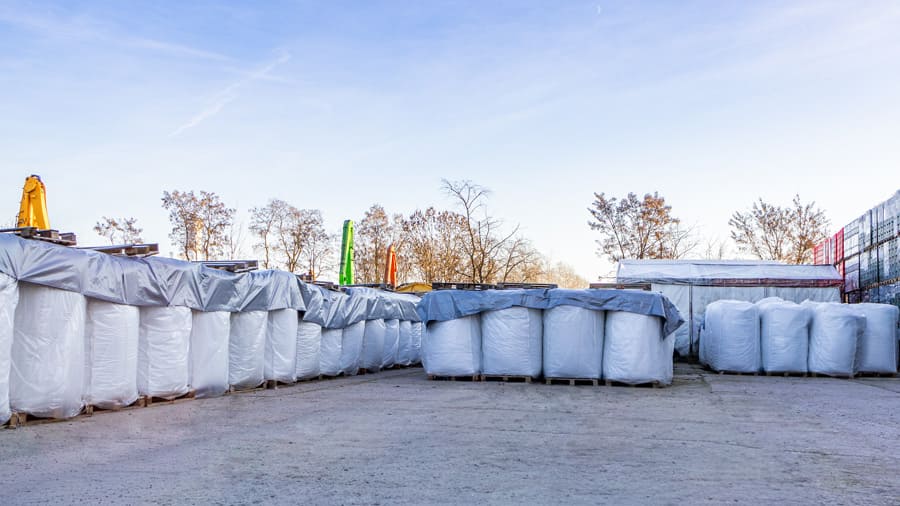
Bulk bags stored in exterior warehouse
Performance Breakdown

Where performance breaks down.

Bulk bags are often an overlooked variable in plant performance. Because each bag can hold 500 kg to over 2,000 kg, even small inefficiencies scale quickly. A structured analysis turns these hidden losses into measurable gains.

Overfilling & Product Giveaway

Oversized or inconsistently filled bags result in product loss at scale. Even a small overfill per bag becomes significant across thousands of lifts per year.

Incorrect Bag Sizing

An improperly specified FIBC reduces pallet efficiency, increases freight costs, and creates stability issues during transport and warehouse storage.

UV Degradation

Woven polypropylene weakens under UV exposure. Bags stored outdoors or near skylights degrade faster than expected, increasing failure risk.

Inefficient Filling Systems

Inaccurate or uncalibrated filling equipment leads to inconsistent weights, slower throughput, and ongoing product loss across high-volume operations.

Safety & Handling Risks

Improper bag selection, worn lifting loops, or handling practices that exceed SWL create serious safety exposure and potential liability.

Excess Freight Costs

Poor bag geometry reduces pallet utilization and transportation density, driving up your cost per ton shipped across every truckload.

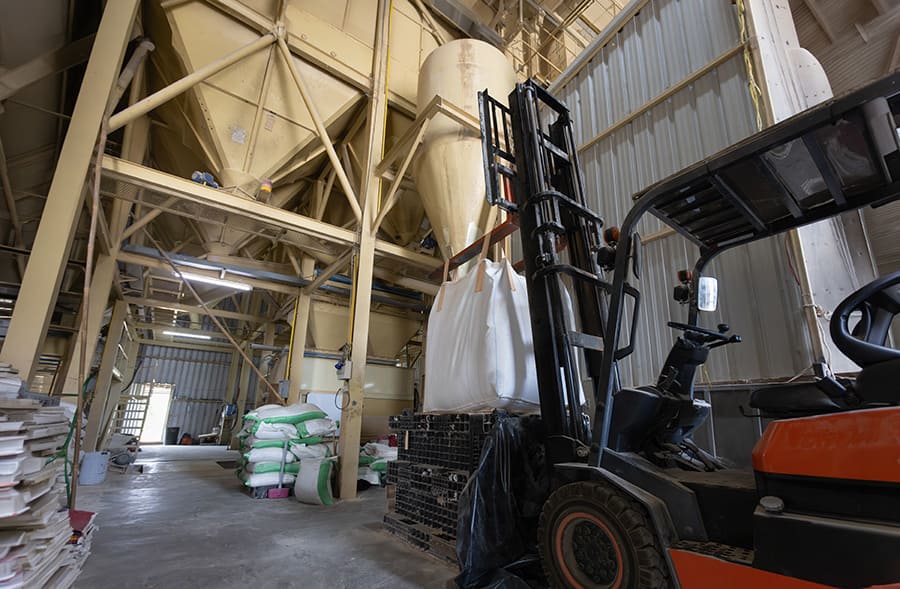
Forklift handling bulk bags in warehouse

Hidden Cost Analysis

Where we typically find hidden cost.

These four areas account for the majority of recoverable cost in most operations. In many cases, the savings generated far exceed the cost of the bags themselves.

Bag Design or SizingProperly sized bags hold their shape, improve pallet utilization, and increase transportation density. Oversized or undersized FIBCs create cascading cost and stability issues throughout the supply chain.

Overfilling & Fill VariabilityInconsistent fill weight results in product loss, reduced stacking stability, and declining transportation efficiency. Small improvements in fill accuracy generate large gains when scaled across volume.

Inefficient Filling SystemsCalibrated scales, pre-weigh hoppers, and automated fill controls eliminate the variability that manual systems create. Even modest accuracy improvements scale significantly at high volume.

Safe Working Load (SWL) ComplianceEvery FIBC has a rated SWL. Exceeding it risks seam failure, fabric rupture, and safety exposure. Standard safety factors are 5:1 for single-trip and 6:1 for multi-trip bags.

Material & Design

Material and design optimization.

Bulk bag performance is highly dependent on design choices. Improper lifting practices or loop configurations can lead to damage, downtime, and safety exposure. We evaluate all four of the following areas on every analysis.

UV Degradation & Storage

Woven polypropylene degrades under UV exposure, weakening the fabric over time. Mitigation strategies include UV stabilizers during manufacturing, controlled storage conditions, and minimizing outdoor exposure. Even treated bags degrade — storage practices matter.

Structural Design

Design features directly impact handling and transport efficiency. Baffle bags maintain a square shape, improve pallet utilization, and reduce collapse in transit. Loop type and placement determine forklift compatibility and load distribution across the bag's body.

Moisture Protection

For hygroscopic materials, protection may require polyethylene liners, laminated coatings, or sealed seams. These prevent contamination and preserve product integrity throughout storage and transit — especially for food ingredients, chemical powders, and pharmaceuticals.

Lifting Configuration

Loop design affects both efficiency and damage risk. Cross-corner loops, side-seam loops, stevedore straps, and tunnel loops each serve different applications. Correct selection improves forklift handling and reduces wear over the bag's service life.

Operational & Safety

Operational and safety improvements.

Bulk bags carry significant weight. Handling practices directly affect safety, throughput, and bag lifespan. We evaluate and recommend improvements across three key operational areas.

Closing Methods

Improper closing techniques increase labor strain and output inconsistency. Standardized methods such as flowering, combined with pneumatic tie tools, improve both speed and ergonomics at the filling station and reduce variation between operators.

Lifting Practices

Basic handling discipline reduces risk significantly: use all lifting loops, keep loops vertical, avoid sudden movement, and never stand beneath a suspended load. Forklift tine condition matters — damaged tines cause premature wear and tear on the bag fabric.

Storage & Inventory

Bulk bags degrade over time. Best practices include indoor storage, protection from UV and moisture, and FIFO inventory management. Using older bags first reduces the performance risk of aged stock before it reaches the filling station.

Root Cause Analysis

When failures occur, replacing the bag is not a solution.

Understanding the cause is. InterBULK conducts structured failure analysis to identify whether the issue is design, handling, environment, or overloading — and to prevent it from recurring.

Our analysis includes:

  • Visual documentation of the failure
  • Product and fill review
  • Tag and specification verification
  • Material and seam testing

Testing may include:

  • Top lift
  • Drop
  • Compression
  • Tear propagation
Freight logistics and cost analysis graph
FIBC optimization results review

Results

FIBC optimization that delivers measurable results.

Our analysis focuses on real, measurable outcomes — not general recommendations. In many cases, the savings generated far exceed the cost of the bags themselves.

  • Reduced product giveaway
  • Improved fill accuracy
  • Lower cost per ton handled
  • Fewer bulk bag failures
  • Improved logistics and pallet density
  • Stronger safety performance

Our Process

How the InterBULK process works.

Our approach follows a structured consulting model — from initial operational review through implementation and deployment of improved solutions.

Operational Assessment

Review specifications, handling, filling, and storage practices across your operation.

Data & Cost Analysis

Evaluate cost per bag, cost per ton, variability, and loss across the full supply chain.

Design Optimization

Adjust geometry, fabric, loops, liners, and coatings to match your actual operating conditions.

Process Improvement

Refine filling, handling, and storage systems to reduce variability and lower cost per ton.

Implementation Support

Source, test, and deploy improved solutions with full support through the transition.

Operational & Safety

When to consider a Bulk Bag Analysis.

For over 20 years, InterBULK USA has worked with companies to diagnose and correct performance issues in bulk bag systems. We look at the full operation: bag design, filling accuracy, handling, storage, and cost per ton. This service is especially valuable if you are:

Operational Issues

Experiencing inconsistent fill weights, bag failures, or handling issues — or scaling production and increasing volume where existing inefficiencies will compound.

Cost & Procurement

Trying to reduce freight or packaging costs, evaluating new FIBC designs or suppliers, or looking to establish a lower cost-per-ton benchmark for your operation.

Request a Bulk Bag Analysis

If your bulk bag system hasn’t been formally evaluated, there’s a strong chance you’re leaving efficiency and cost savings on the table. Let’s find out.

Search