Four FIBC types for controlling static electricity across every combustible and flammable material environment.
.
Static Control for Bulk Handling
Why Static Matters in FIBC Operations
Electrostatic discharge is a real hazard in bulk material handling. When a standard polypropylene bag fills or discharges, friction between the material and the fabric generates static charge. In the presence of flammable dusts, vapors, or gases, that charge can ignite an explosion.
FIBCs are classified into four types — A, B, C, and D — based on how they manage that charge. Selecting the right type for your material and environment is not optional. It determines whether your operation is safe.
InterBULK supplies all four types and uses UV-treated, insulation-proof polypropylene fabric engineered to limit static accumulation. We can help you identify the correct type for your application before you order.
FIBC Type Classification
The Four Antistatic FIBC Types
Each type is built from different materials and offers a different level of static protection. The right choice depends on the Minimum Ignition Energy (MIE) of your material and the atmosphere in which the bag will be used.
Type A
Standard bags with no static protection. Suitable only for non-flammable materials in non-hazardous environments. Not antistatic by design.
Type B
Prevents dangerous sparks and propagating brush discharges by limiting surface breakdown voltage to 6 kV or less. Does not dissipate static. No grounding required.
Type C
Conductive fabric with interwoven grounding threads. Controls static when properly grounded during filling and discharge. Grounding is mandatory.
Type D
Dissipates static safely without any grounding connection. The highest level of protection for flammable materials. No risk of human error in grounding.
| Minimum Ignition Energy (MIE) of Dust | Non-Flammable Atmosphere | Explosive Dust Atmosphere | Explosive Gas & Vapor Atmosphere |
|---|---|---|---|
| MIE > 1,000 mJ | A, B, C, D | B, C, D | C, D |
| 1,000 mJ ≥ MIE > 3 mJ | B, C, D | B, C, D | C, D |
| MIE ≤ 3 mJ | C, D | C, D | C, D |
MIE = Minimum Ignition Energy. Lower MIE values indicate higher ignition sensitivity and require more protective bag types.
Type Detail
Type B and Type C Bags
Both types cover combustible dust environments, but they work differently and have distinct restrictions. Knowing which one fits your process matters before you order.
Type B — No Grounding Required
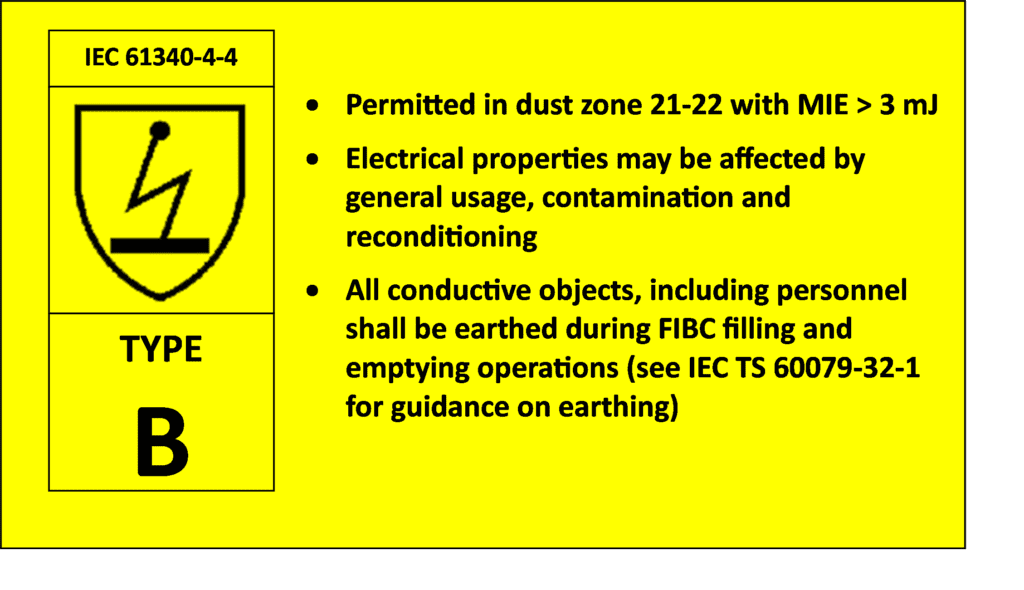
Type B bags are defined by a surface breakdown voltage of 6 kV or less. Many uncoated woven PP bags naturally meet this threshold due to air gaps in the woven tapes — even when not explicitly labeled as Type B.
Type B prevents sparks and propagating brush discharges, but does not dissipate static electricity. They should not be used anywhere flammable solvents, vapors, or gases are present.
Permitted Use
Combustible dusts and powders (sugar, corn starch, etc.)
Not Permitted
Flammable dusts and powders (bisphenol-A, etc.)
Flammable gases (pentane, butane, etc.)
Flammable vapors (toluene, xylene, etc.)
Type C — Grounding Required
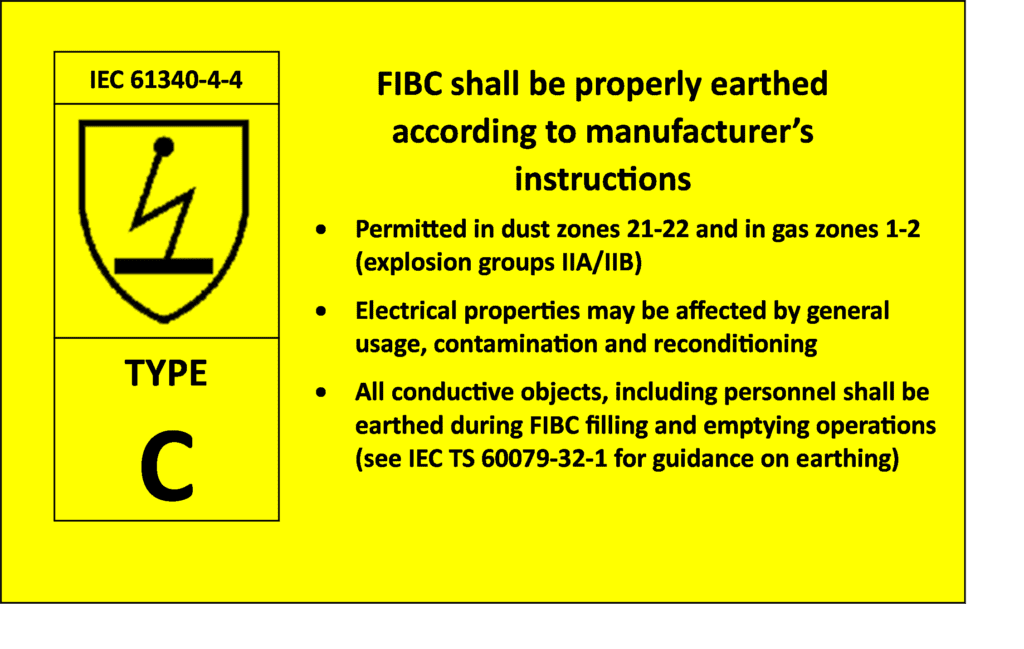
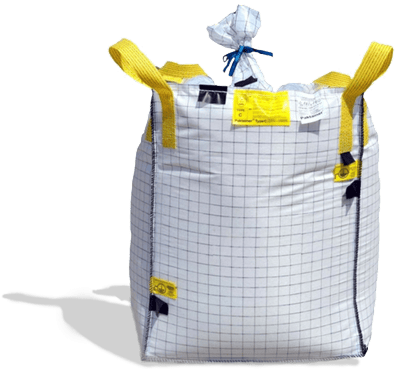
Type C bags are built from non-conductive PP fabric interwoven with conductive threads in a grid pattern. Those threads must be electrically connected and grounded during every filling and discharge cycle to control static safely.
Type C covers all flammable material environments. However, a broken or missed ground connection eliminates all protection and creates a serious hazard.
Permitted Use (with verified grounding)
Combustible and flammable dusts and powders
Flammable gases (pentane, butane, etc.)
Flammable vapors (toluene, xylene, etc.)
Do not use without a verified ground connection. Do not use if grounding components are damaged or if resistance between bag and ground point is compromised.
Maximum Protection, No Grounding
Type D Antistatic Bags
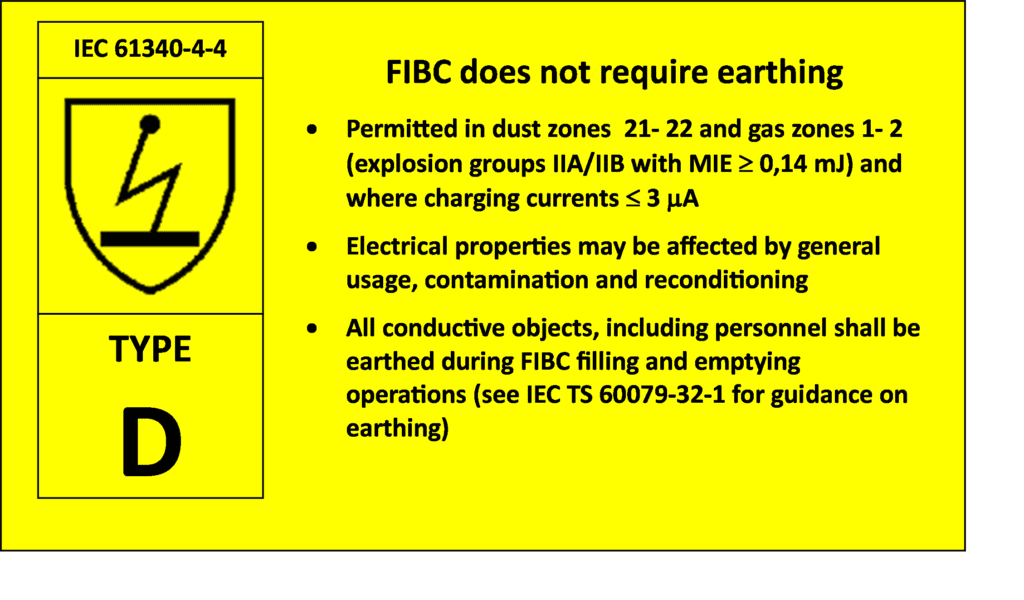
Type D bags dissipate static electricity safely without any earthing or grounding connection. They are designed for volatile and combustible materials where controlling static is non-negotiable, but where the risks of a missed grounding step are unacceptable.
CROHMIQ Type D FIBCs actively prevent static buildup and eliminate the risk of ignition sparks. Unlike Type C bags, there is no grounding cable to connect, no connection to verify, and no risk of human error during the process.
In high-volume operations where a Type C bag could go ungrounded during a busy shift, Type D removes that failure mode entirely. InterBULK carries CROHMIQ Type D inventory and can supply documentation for compliance purposes.
Permitted Use
Combustible and flammable dusts and powders (sugar, corn starch, bisphenol-A, etc.)
Flammable gases (pentane, butane, etc.)
Flammable vapors (toluene, xylene, etc.)
Our Certifications
Standards Our Manufacturers Hold
Our manufacturing partners are certified across food safety, environmental, and quality standards, including BRC, GFSI, FDA, CFIA, Halal, Kosher, ISO, IMO, and UN.






Why InterBULK
We Help You Choose the Right Type Before You Order
Using the wrong antistatic bag type in a flammable environment is not just a compliance issue. We review your material data, MIE values, and process conditions to confirm the correct type before any order is placed. If you’re upgrading from Type C to Type D, we can walk through the cost-benefit of eliminating the grounding step.
Application Review
We match your material MIE and atmosphere to the correct FIBC type before the order is placed.
CROHMIQ Type D Stock
InterBULK carries CROHMIQ Type D inventory with full compliance documentation available.
US and Canada Stock
Antistatic bags held in both countries for faster delivery on either side of the border.
Direct from Factory
Sourced directly from certified manufacturers. Every bag is traceable to its production batch.
Need Antistatic Bulk Bags?
Tell us your material, environment, and quantity. We’ll confirm the right type and get you a quote.