A food-grade liner doesn’t make a bag food grade on its own. Here’s what actually does, and what to ask your supplier about it.
.

Mark Moellman
Founder, InterBULK USA
8 min read
Start Here
Food grade starts with the facility, not the bag.
A common assumption is that a food-grade liner is what makes a bulk bag food grade. It isn’t, not on its own.
The liner is one component of an FIBC, and not every food product needs one. Coarse, dry materials like rice or sugar don’t always require a liner the way fine powders like flour do. What actually determines food-grade status is where and how the bag was made.
A BRC-certified facility runs a clean room with controlled air quality, pest control, hygiene protocols for the people working the line, and a documented HACCP plan that identifies and controls contamination risk at every step of production. That’s the standard. A bag made outside that environment isn’t food grade, no matter what liner gets dropped inside it afterward.
The Real Risk Points
Where contamination actually comes from.
Two things matter more than most buyers realize: what the bag is made from, and what could end up inside it by accident during manufacturing.
Food-grade fabric has to be 100% virgin polypropylene. Recycled PP carries an unknown history: you don’t know what the resin held before it was reprocessed, and that’s a risk a certified facility won’t take. Every batch of virgin resin used in a BRC facility is documented and traceable back to its source.
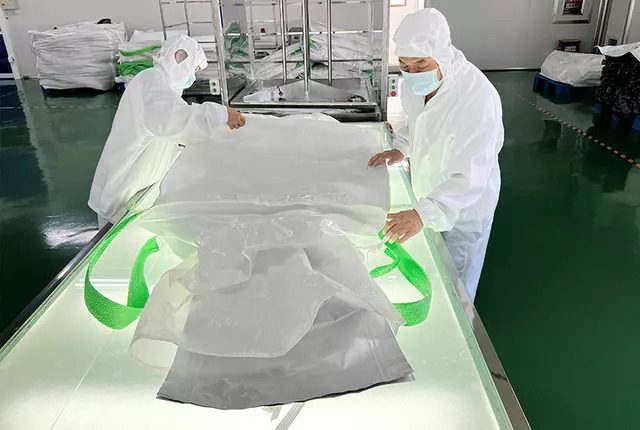
The other risk point is mechanical, not material: broken sewing needles. Every FIBC is sewn, and needles break during production. BRC-certified facilities run metal detection and light-table inspection on every bag specifically to catch fragments before a bag ships, a step that’s easy to skip in a facility that isn’t food-certified.
Why It Matters
Three things that actually make a bag food grade.
None of these show up on a spec sheet the way a liner does, which is exactly why they’re worth asking your supplier about.
A BRC-Certified Facility
Clean room manufacturing, a documented HACCP plan, and pest control. This is the baseline everything else depends on.
100% Virgin Resin
No recycled polypropylene. Every batch of resin is traceable back to source with no unknown contamination history.
Metal Detection on Every Bag
Sewing needles break. Certified facilities catch fragments with metal detectors and light-table inspection before a bag ever ships.
Worth Asking About
Traceability matters more than people think.
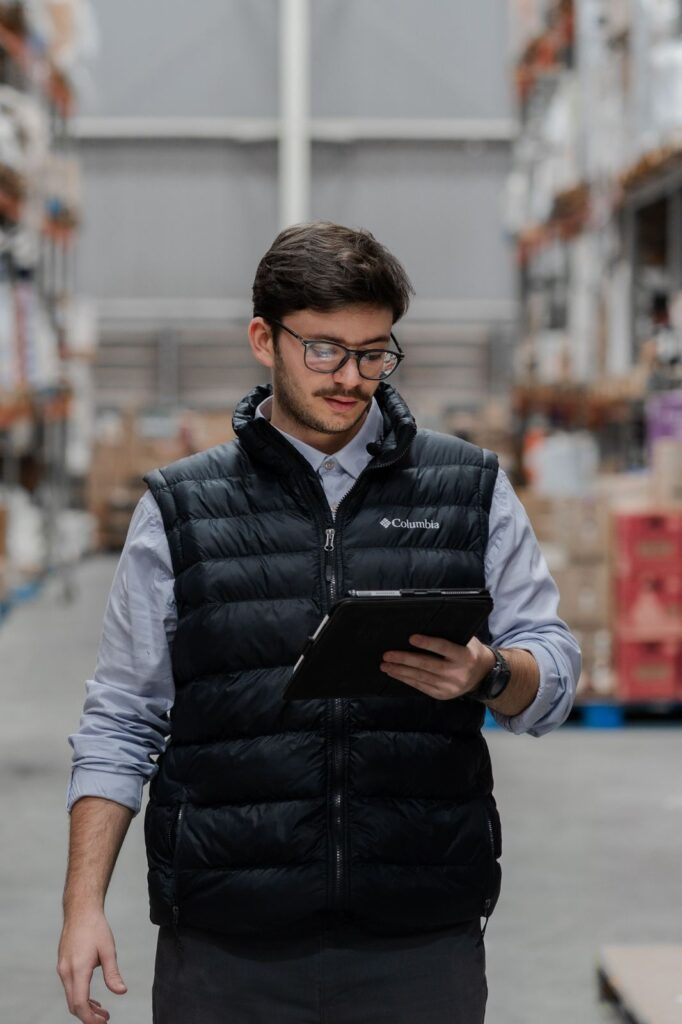
If a question ever comes up about a shipment, every food-grade bag should be traceable back to the lot it came from, the resin batch used, and the date and shift it was made on. A real BRC facility keeps that data on every run, not just for audits, but because it’s the difference between a fast answer and a guessing game if something needs to be tracked down.
This is also where mock recalls come in. Certified facilities run practice recalls on a schedule, pulling a sample shipment and tracing it back through their own records to confirm the system actually works before it’s ever needed for real.
What to ask your supplier: can they produce a certificate of conformance and a lot number for any shipment, and can they tell you which resin batch and production run a specific bag came from. A clear, fast yes is a good sign the rest of the food-grade claims hold up too.
Common Questions
What buyers ask about food grade bags.
Straight answers to the questions that come up most before a food or pharmaceutical order.
What makes a bulk bag "food grade"?
The facility it’s made in, not a feature added afterward. A food grade bag is manufactured in a BRC-certified clean room facility using 100% virgin polypropylene resin, with metal detection and documented hygiene controls at every step. A bag made outside that environment isn’t food grade no matter what liner or label gets added to it later.
What is BRC certification?
BRC, now BRCGS (British Retail Consortium Global Standards), Packaging Materials is a GFSI-recognized certification that audits a packaging manufacturing facility, not an individual bag, for hygiene, traceability, pest control, and documented quality control. It’s one of the most widely recognized food safety certifications in the packaging industry, used by thousands of facilities in over 100 countries.
Do food grade bags need a liner?
Not always. The liner is one component of an FIBC and isn’t required for every product. Coarse, dry materials like rice or sugar often don’t need one, while fine powders like flour usually do. The liner protects against moisture or contamination for specific products, but it doesn’t determine whether a bag is food grade, the facility does.
Can a food grade bag be made from recycled plastic?
No. Food grade fabric must be 100% virgin polypropylene. Recycled PP carries an unknown contamination history since there’s no way to verify everything the resin held before it was reprocessed, which is a risk certified facilities won’t take.
What's the shelf life of a food grade bulk bag before it's used?
There’s no fixed expiration date, but woven polypropylene degrades under UV exposure over time. Bags should be stored indoors in normal warehouse conditions until they’re filled. As long as storage stays indoors and climate-controlled, a properly made food grade bag holds up well for normal inventory turnover.
What's the difference between BRC and FDA compliance?
They cover different things. FDA regulation 21 CFR 177.1520 addresses whether virgin polypropylene resin is safe for food contact at the material level. BRC certification audits the facility and process where the bag is actually made: hygiene, traceability, pest control, and documentation. A bag can use FDA-compliant resin and still not be food grade if it wasn’t made in a BRC-certified facility.
Worth Thinking About
A straight answer is the test.
If your current supplier can’t tell you which facility your food-grade bags were made in, what resin was used, or how to trace a specific lot, that’s worth a second look.
Not because something's necessarily wrong, but because you should be able to get a straight answer.
Need bags built for food contact?
Tell us what you’re packing and we’ll match the right facility, resin, and liner decision for it: no guesswork, no surprises at the receiving dock.