.

UN Certified Bulk Bags

Engineered and tested to United Nations standards for the safe transport of hazardous materials.

Hazardous Materials Transport

What Is a UN Certified Bulk Bag?

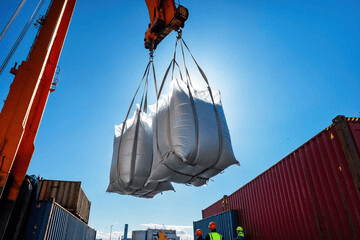
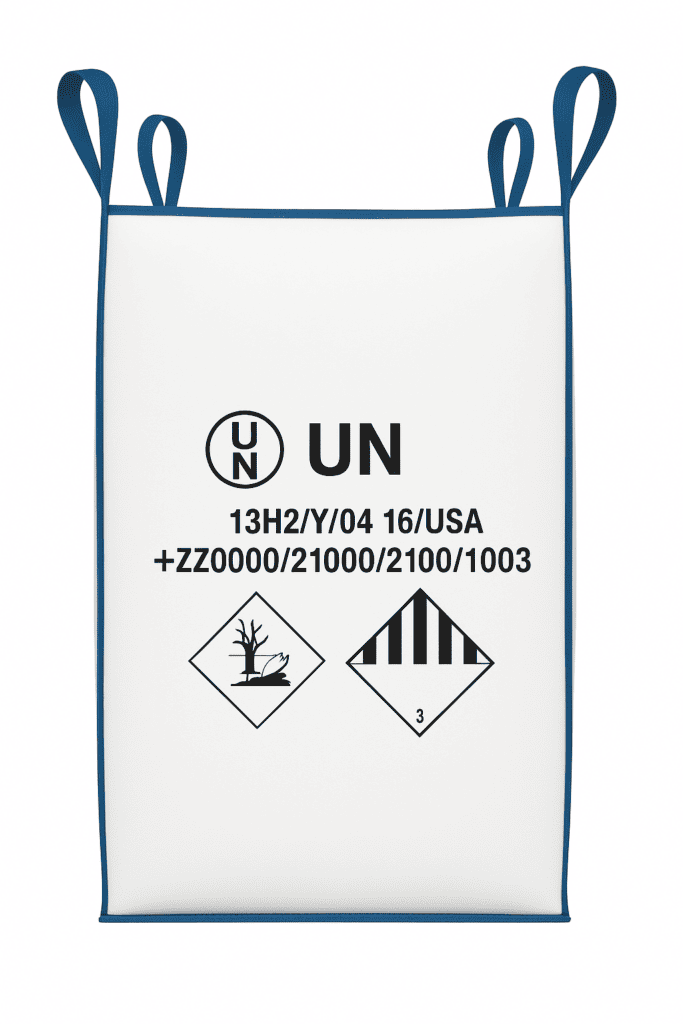
UN certified FIBCs are manufactured under strict quality systems and tested to United Nations standards. They exist for one reason: safe, compliant transport of hazardous materials including flammable, combustible, toxic, and environmentally sensitive chemicals.

Standard bulk bags are not permitted for hazardous goods. A UN certified bag has been tested against seven mandatory performance criteria, marked with standardized identifiers, and approved for specific packing groups. Every bag carries its certification visibly on the label.

InterBULK reviews your requirements, analyzes your material specs, and identifies the exact UN-approved FIBC design that meets your safety and regulatory needs.
UN Certified Bulk Bag for hazardous materials transport

Certification Requirements

7 Mandatory Performance Tests

Every UN-certified FIBC must pass all seven of these tests before it can be approved and marked. Failing even one means the bag cannot be certified. The tests validate strength, durability, and containment under real-world handling conditions.

Top lift test being performed on a UN certified bulk bag

Top Lift Test

The filled bag is lifted by its loops under six times its rated Safe Working Load for five minutes. No failures permitted at any point.

Stacking Test

A filled bag is placed under pressure equivalent to two identical bags stacked on top for 24 hours. Full structural integrity required.

Drop Test

Filled bags are dropped from heights set by packing group classification. No ruptures or leakage are permitted on impact.

Topple Test

The filled FIBC is toppled from a raised platform at a regulated height. The bag must remain structurally intact on impact.

Righting Test

A bag on its side is lifted upright using only two loops. Loops, stitching, and fabric must show no tearing or distortion.

Tear Test

A 100 mm angled cut is made in the fabric. Under 2x SWL for five minutes, the tear may not spread more than 25 mm.

Vibration Test

A filled bag is placed on a vibrating platform for 60 minutes. No leaking, cracking, or structural failure is permitted.

Reading the Label

UN Label Markings Explained

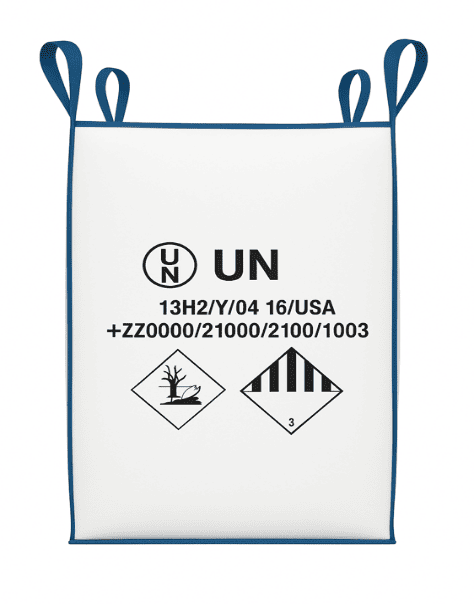
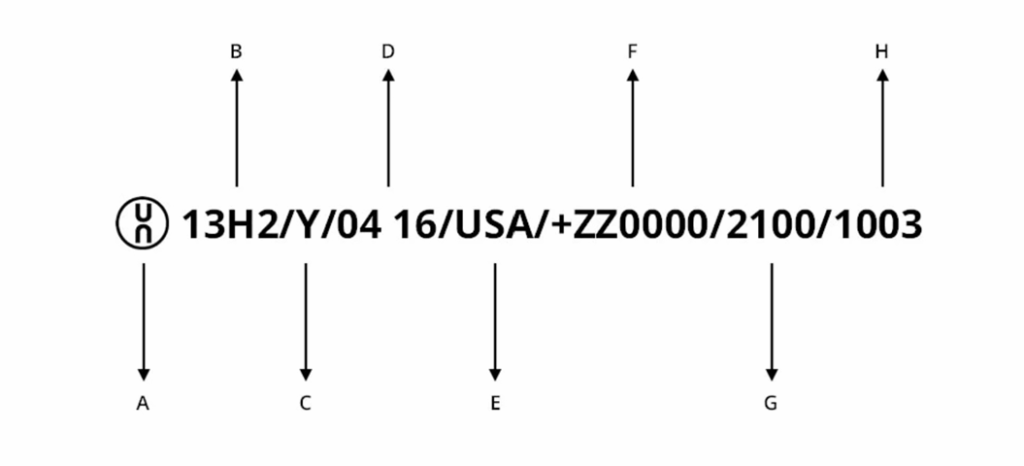
Every UN-certified FIBC carries standardized markings that communicate critical safety and regulatory information. All markings must be visible, durable, and at least 12 mm tall to remain readable throughout the bag’s service life.

UN Packaging Symbol

FIBC Designation Code

13H1 (Uncoated, No Liner) / 13H2 (Coated, No Liner) / 13H3 (Uncoated, With Liner) / 13H4 (Coated, With Liner)

Approved Packing Group Letter

X (Groups I, II, III) / Y (Groups II, III) / Z (Group III only)

Manufacturing Date (month/year)

Country of Certification

Manufacturer Name or Identification Code

Stacking Test Load (kg)

If the bag is not designed for stacking, this field shows "0"

Maximum Allowable Weight (kg)

UN label markings on a certified bulk bag
Standardized UN markings for safe handling and compliance

Hazardous Material Labels

8 Hazard Classes for UN FIBCs

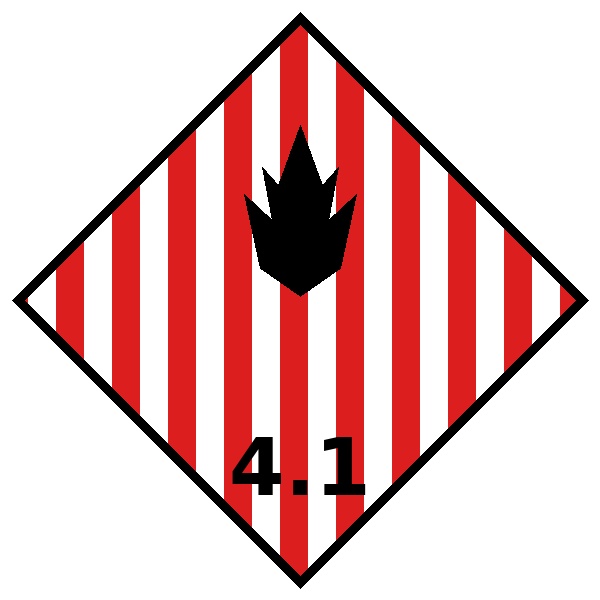
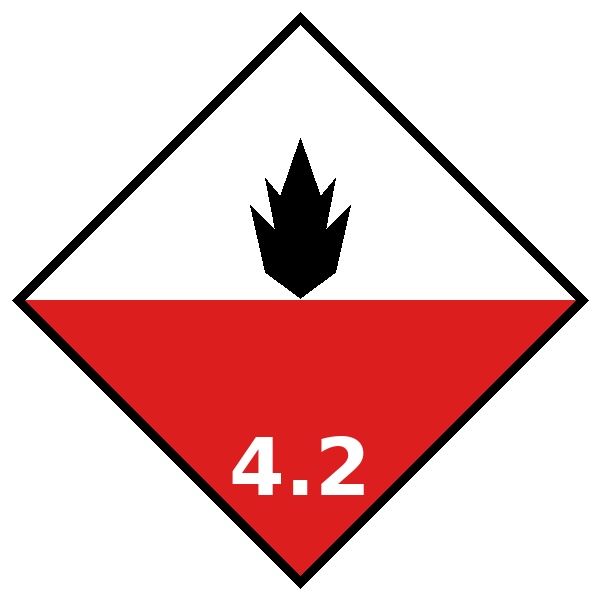
FIBCs transporting hazardous materials must display the appropriate hazard label for their contents. These placards are standardized across the supply chain so carriers, handlers, and inspectors can identify the material class at a glance. Labels must be placed in a visible location and remain legible throughout the life of the bag.

A) Class 4.1

Flammable Solids

Solids that are readily combustible or may cause fire through friction.

placard-img

B) Class 4.2

Spontaneously Combustible

Materials liable to spontaneous heating or ignition on contact with air.

placard-img

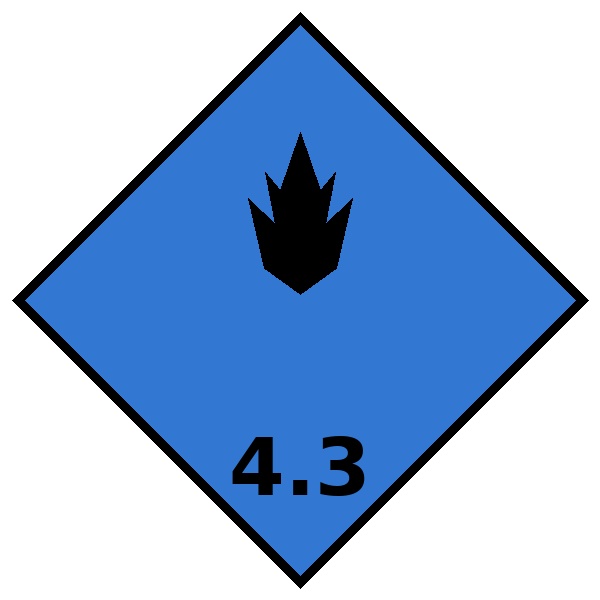
C) Class 4.3

Dangerous When Wet

Materials that emit flammable gas on contact with water.

placard-img
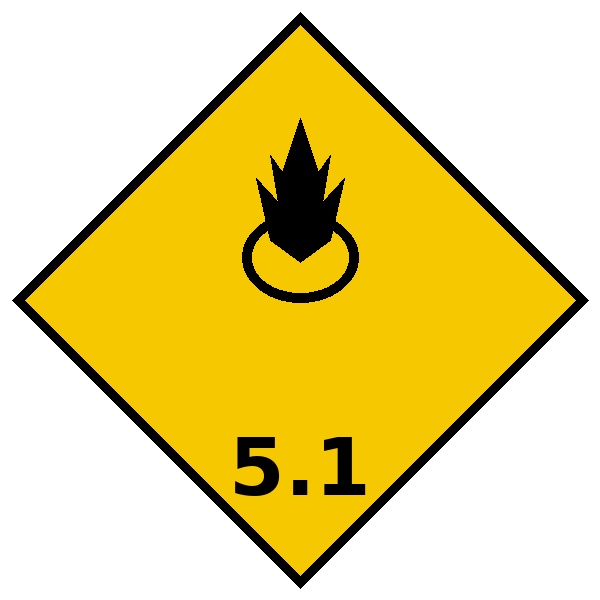
D) Class 5.1

Oxidizing Substances

Materials that may intensify fire by providing oxygen or similar oxidizing agents.

placard-img

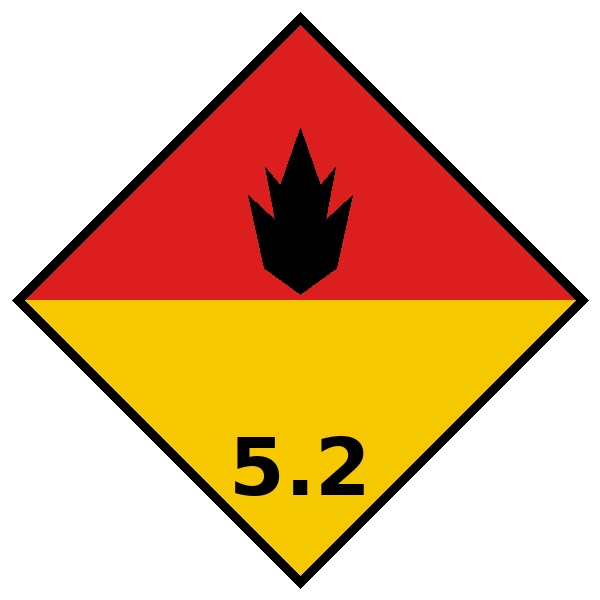
E) Class 5.2

Organic Peroxides

Thermally unstable substances that can undergo exothermic self-accelerating decomposition.

placard-img

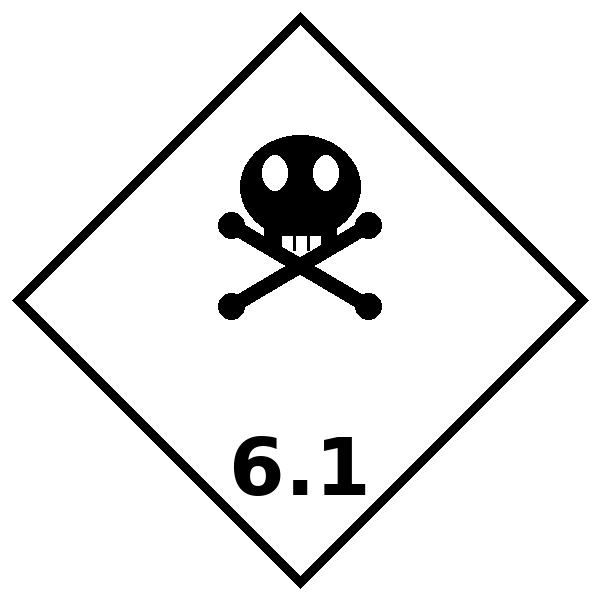
F) Class 6.1

Toxic Substances

Materials known to cause serious harm or death on ingestion, inhalation, or skin contact.

placard-img
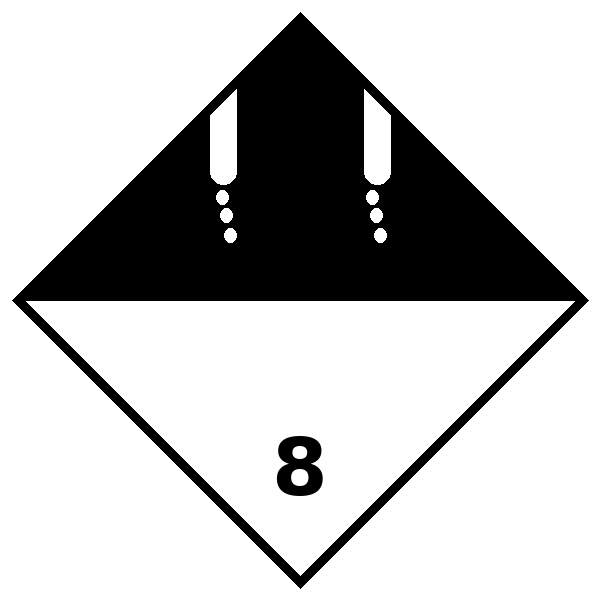
G) Class 8

Corrosives

Substances that cause full-thickness destruction of skin tissue or corrode metal on contact.

placard-img
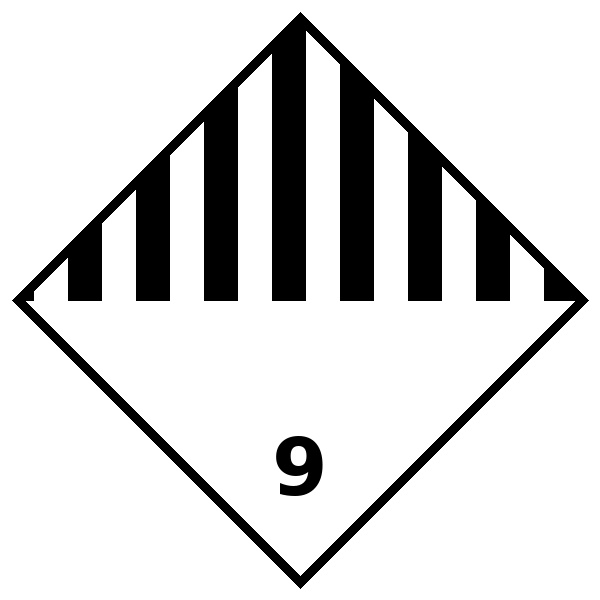
H) Class 9

Miscellaneous Dangerous Goods

Substances and articles that present a hazard during transport not covered by other classes.

placard-img

Our Certifications

Standards Our Manufacturers Hold

UN certification is one of nine standards held by our manufacturing partners. The full list includes BRC, GFSI, FDA, CFIA, Halal, Kosher, ISO, IMO, and UN.

BRC Food Certification
CFIA ACIA
FDA Compliant
GFSI
Halal
IMO
ISO
Kosher
UN

Why InterBULK

We Do the Compliance Work for You

UN certification involves specific packing group requirements, test documentation, and label markings. We review your material data, match it to the right certified bag design, and supply the documentation your team or carrier needs. No guesswork on your end.

Spec Review

We match your material class and packing group to the right certified bag design before you order.

Full Documentation

Certification records, test reports, and label documentation available for every order.

US and Canada Stock

UN certified bags held in inventory on both sides of the border for faster fulfillment.

Direct from Factory

No intermediaries. We source directly from certified manufacturers and can trace every bag to its test batch.

Need UN Certified Bags?

Tell us your material class, packing group, and quantity. We’ll find the right certified bag and get you a quote.

Search