The number printed on every compliant bulk bag isn’t decoration. Here’s what it means, and when 5:1 isn’t enough.
.

Mark Moellman
Founder, InterBULK USA
8 min read
Start Here
The number on the bag isn't decoration.
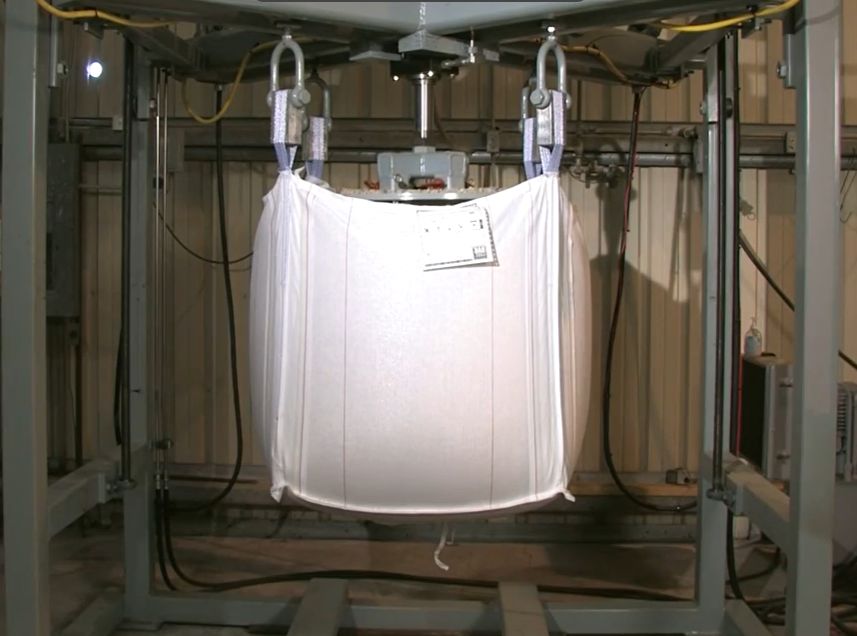
Every compliant bulk bag is built and tested to a Safety Factor: a multiple of the weight it’s rated to carry in normal use.
That rated weight is called the Safe Working Load, or SWL. A standard single-trip bag carries a Safety Factor of 5:1. A bag rated to carry 1,000 kg has been built and tested to survive 5,000 kg before it’s considered compliant.
That margin isn’t marketing. It accounts for the rough handling a bag goes through on its way from the filling line to the end customer: lifting, stacking, transport vibration, temperature swings. The 5:1 number is the floor every standard FIBC has to clear.
The Next Level Up
When 5:1 isn't enough.
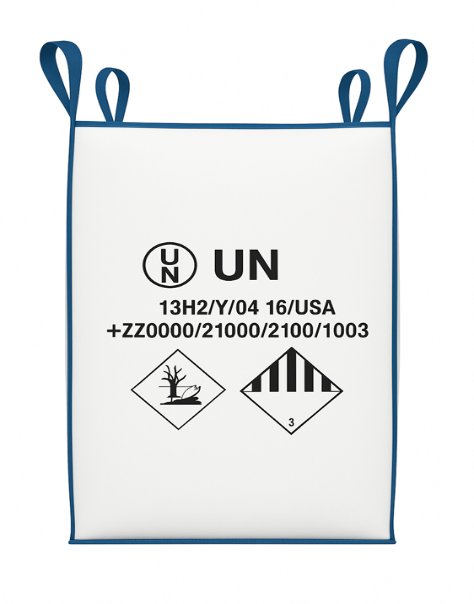
If what’s going in the bag is classified as hazardous for transport (flammable powders, certain chemicals, reactive materials), the bag needs to step up to a 6:1 Safety Factor and carry UN certification.
The testing is more demanding. A UN-rated bag has to survive 70 press-and-release lift cycles at four times its rated load, then a final cycle at six times, before it earns the certification. That 6:1 rating exists because the material being shipped is classified as hazardous, not because the bag itself is meant to make more than one trip.
The takeaway for buyers: if someone quotes you a bag for hazardous material at a 5:1 price, ask why. It may be the wrong bag for what you’re shipping, not a good deal.
Why It Matters
Three things to keep straight about safety factors.
None of this is complicated once you know what the numbers mean, but it’s easy to assume “a bag is a bag” until it isn’t.
5:1 Is the Floor, Not a Feature
Every standard FIBC is built to this margin. It's the baseline for a single-use bag, not an upgrade someone is charging you extra for.
6:1 and UN Certification Go Together
If your material is hazardous for transport, the safety factor and the certification aren't separate add-ons. They're the same requirement.
The Right Rating Protects More Than the Load
A bag rated correctly for its contents protects the people loading it, the truck it rides in, and the receiving dock that opens it.
A Common Mix-Up
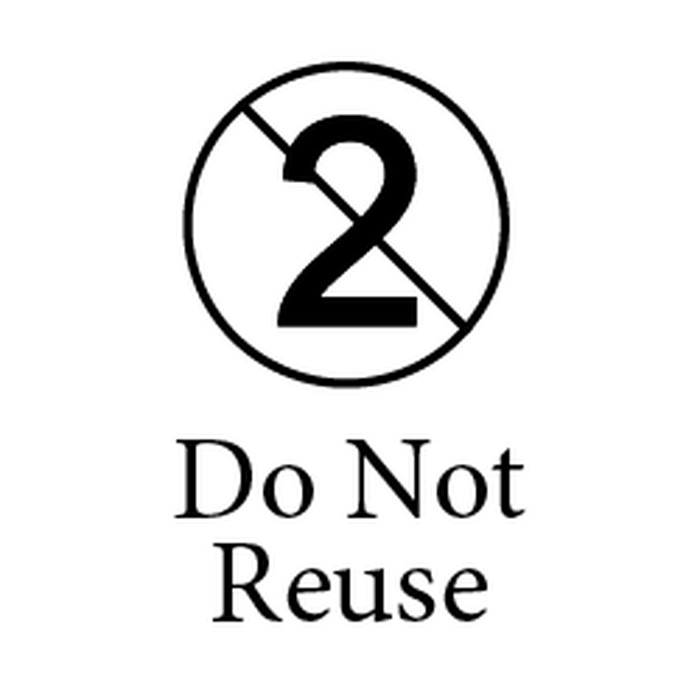
A 6:1 rating does not mean a UN bag gets reused.
UN-certified bags and general multi-trip bags both carry a 6:1 Safety Factor, and it’s easy to assume that means the same thing for both. It doesn’t. A multi-trip bag earns that rating so it can be inspected, reused, and refilled with the same product over several cycles. A UN-certified bag earns the same rating because the material it’s carrying is classified as hazardous for transport, not because the bag itself is meant to make a second trip.
Once a UN bag has carried a hazardous load, it can’t be treated as a true 6:1 bag for another shipment. The annual recertification required for UN-rated bags applies to the manufacturer’s design and production line, not to an individual bag after it’s been filled and used. In practice, a UN-certified bag should be treated as single-trip, even though it’s built and tested to the same strength as a bag designed for repeat use.
If hazardous material needs to ship more than once, the answer isn’t reusing the same UN bag. It’s ordering enough properly certified bags to cover each shipment. Anything else puts the certification, and the load, at risk.
Common Questions
What buyers ask about safety factors and UN bags.
Straight answers to the questions that come up most before a hazardous-material shipment.
What does "Safety Factor" mean on a bulk bag?
Safety Factor (SF) is the ratio between a bag’s tested breaking strength and its Safe Working Load (SWL), the maximum weight it’s rated to carry in normal use. A 5:1 safety factor means the bag was built and tested to survive five times its rated load before failure. The number printed on a compliant bag is a manufacturing and testing standard, not a recommendation to load it beyond its rated weight.
What's the difference between a 5:1 and a 6:1 safety factor?
A standard single-trip bag carries a 5:1 safety factor: tested to five times its SWL, built for one use. A UN-certified bag carries a 6:1 safety factor because it’s rated to carry material classified as hazardous for transport. The 6:1 test protocol is also more demanding: 70 press-and-release lift cycles at four times the rated load, followed by a final proof cycle at six times the load.
How is a bulk bag's safety factor tested?
Independent testing labs run a series of physical tests on a sample bag filled to its rated load, including a top lift test, a stacking test, a drop test, and others depending on the certification level. If a bag fails any required test, it cannot be certified or marked as meeting that safety factor.
How often does UN certification need to be renewed?
UN-certified FIBC designs must be recertified annually as part of ongoing compliance, and any change to materials, construction, or the production process requires retesting before the design can keep its certification. This recertification applies to the manufacturer’s design and production line, not to an individual bag after it has already carried a load.
What happens if a bag fails a safety test?
A design that fails any required test cannot be certified and cannot legally carry UN markings or be sold as meeting that safety factor. Manufacturers typically have to adjust the fabric weight, construction, or stitching and resubmit the redesigned bag for a full new round of testing.
Can a UN-certified bag be reused?
No, not in practice, even though it carries the same 6:1 rating as a general multi-trip bag. A UN bag earns its 6:1 rating because the cargo is hazardous, not because the bag itself is built for a second trip. Once it has carried a hazardous load, it should be treated as single-trip rather than reused for another shipment.
Worth Thinking About
A quick question worth asking your supplier.
If you’re shipping anything that might be classified as hazardous, even occasionally, it’s worth confirming whether your current bags are UN-certified.
It's a quick question to ask, and the answer matters more than the price difference.
Not sure if you need UN-certified bags?
Tell us what you’re shipping and how often. We’ll tell you whether you need a 6:1 UN-certified bag or whether a standard 5:1 bag does the job.