Protective inner liners for bulk bags handling moisture-sensitive, food-grade, and chemically reactive materials.
.
When a Bulk Bag Alone Is Not Enough
What Is an FIBC Liner?
A liner is a separate inner bag inserted into the FIBC to create an additional protective barrier between the product and the outer woven fabric. They are standard in agriculture, chemical, pharmaceutical, pet food, metals, and mining applications where the bag alone cannot guarantee product integrity.
Liners are compatible with duffle-top and spout-top bulk bags and are available in several configurations depending on the product, filling method, and required barrier level. Choosing the wrong liner type or fit can reduce protection and cause filling problems.
Moisture
Oxygen
Chemical Exposure
Static Electricity
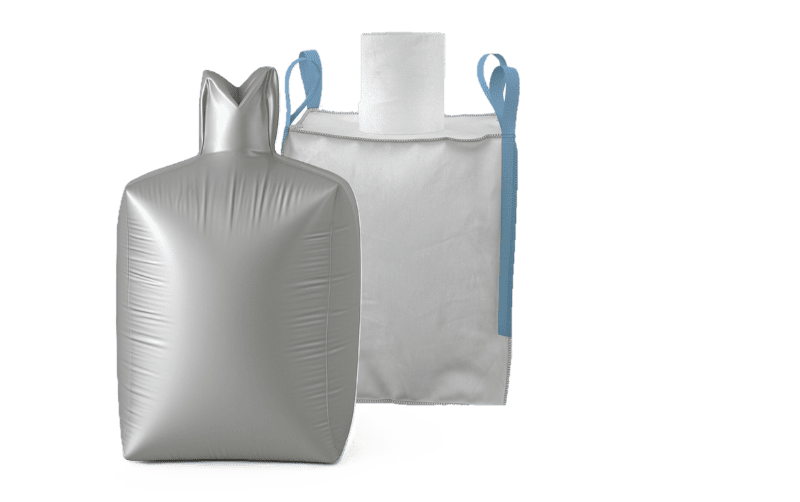
Liner Options
Six Liner Types
Each liner type is built for a different level of protection and a different product category. The right choice depends on what you need to keep out and how sensitive your material is.
Lay-Flat Liners
A cost-effective tube-style liner with one heat-sealed end and one open end. No contours or spouts. Pre-inflate before filling to remove twists and wrinkles. The standard choice for lower-risk products.
Form-Fit Liners
Shaped to match the exact dimensions of the FIBC, including filling and discharge spouts. Provides maximum efficiency at both ends of the process. Can be tailor-made to your specifications.
Aluminum Liners
Multi-layer construction with aluminum foil for superior protection against oxidation, moisture, and corrosion. The correct choice for metals, minerals, and highly sensitive materials where standard PE is not enough.
EVOH Liners
Engineered with Ethylene Vinyl Alcohol for high gas-barrier performance, especially oxygen. Used when product preservation, aroma retention, or contamination prevention is the primary concern.
Conductive Liners
Designed to dissipate static electricity safely. Requires proper grounding and is essential for environments with flammable dusts, solvents, or explosive atmospheres. Pairs with Type C or Type D outer bags.
Nylon Liners
Made from polyamide film for exceptional strength, abrasion resistance, and superior barrier properties. The right choice when durability and product protection are the top priorities over cost.
How Liners Are Fixed in the Bag
Four Attachment Methods
The way a liner is attached to the FIBC affects how well it stays in position during filling and discharge. Loosely inserted liners work fine for many applications, but high-value or sensitive materials benefit from a more secure connection. The right method depends on your product, your line speed, and your risk tolerance.
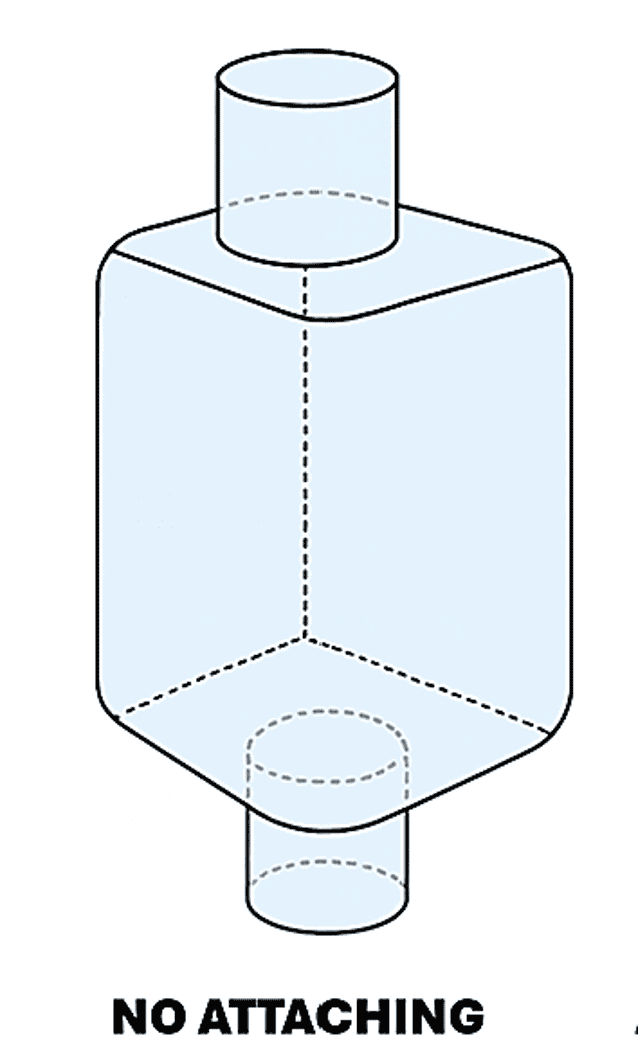
No Attachment (Loosely Inserted)
The liner is placed inside the bag with no connection to the outer fabric. Cost-efficient and fast to set up. Commonly used for fertilizers and other lower-risk dry products where liner movement during filling is acceptable.
Best for: fine powders, chemicals, food ingredients, pharmaceuticals.
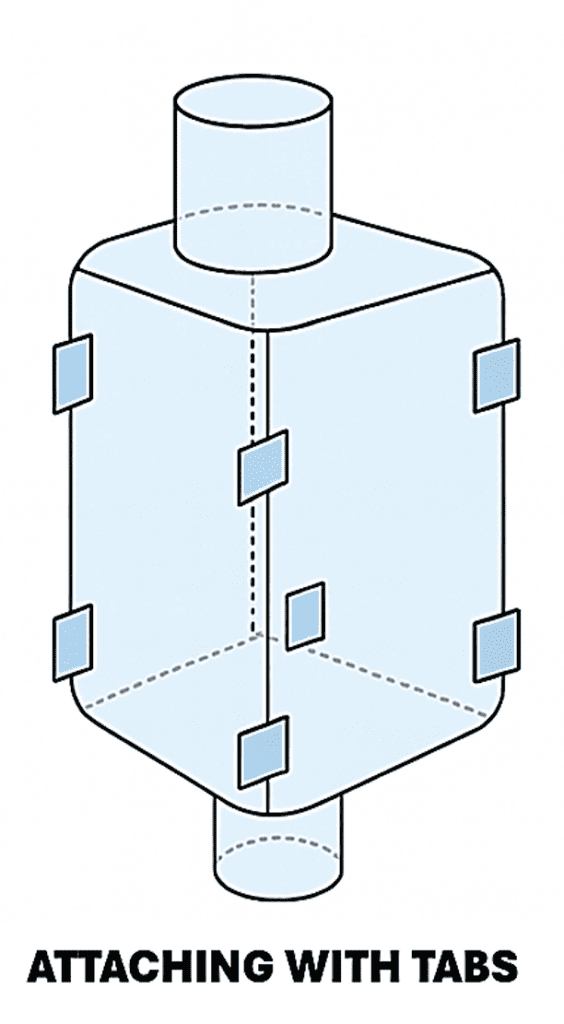
Tabs
Eight tabs are used to secure the liner at the four corners of the bag. Prevents the liner from shifting or collapsing during filling and discharge without requiring a full sewn connection. A practical middle ground between loose and fully fixed.
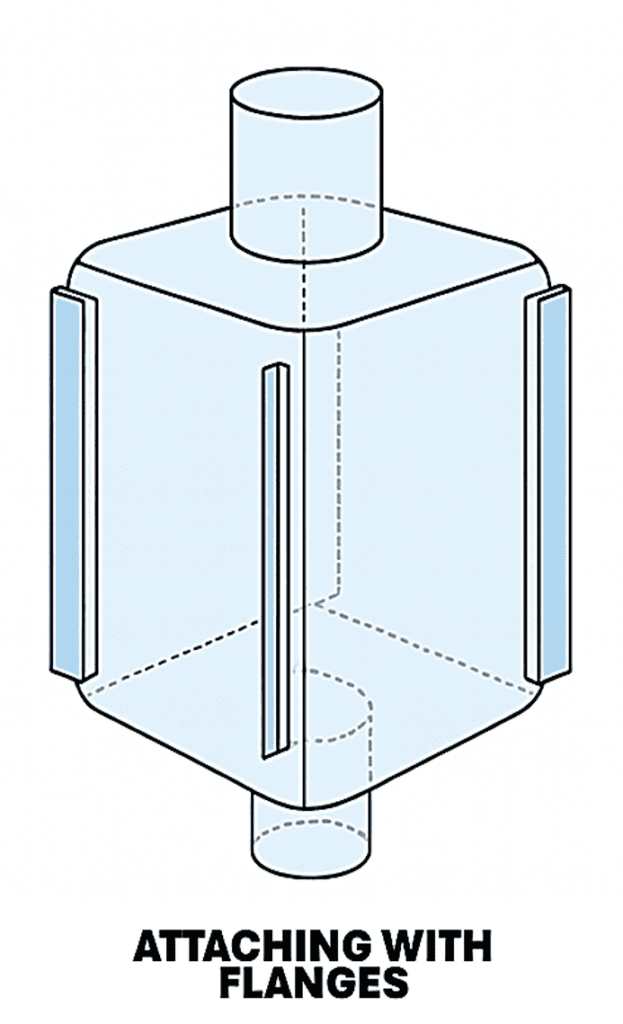
Flanges (Sewn-In)
The liner is sewn continuously into the four vertical seams of the FIBC, creating a fully fixed and non-shifting connection. Maximum stability during filling and discharge. Preferred for fine powders and food-grade applications.
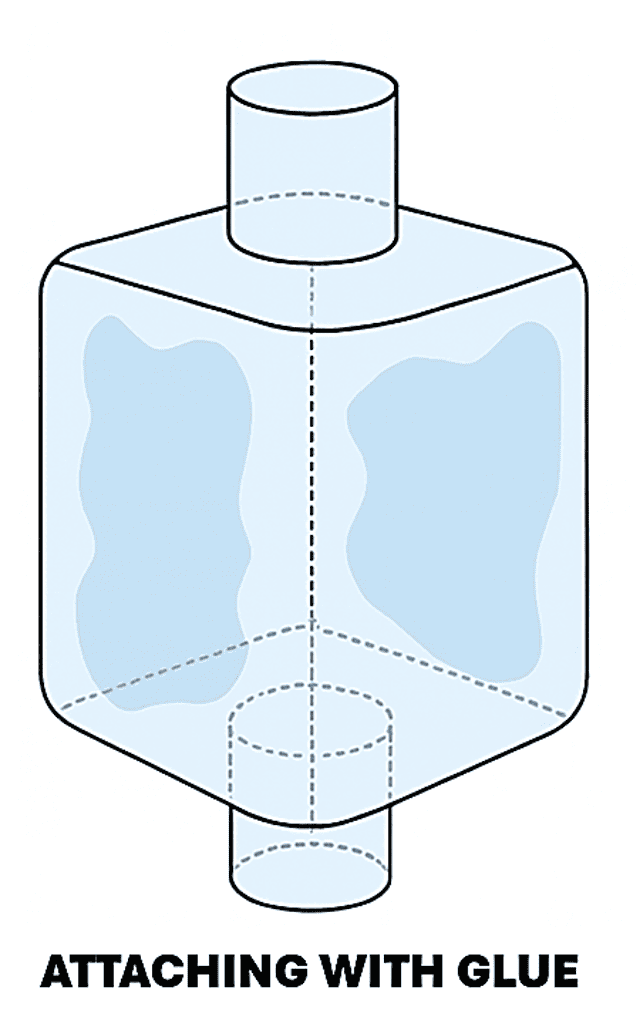
Glued
The liner is bonded directly to the inside walls of the FIBC with adhesive. The most secure attachment method available. Used when positional stability is non-negotiable. Also the most expensive option.
Material Selection
HDPE vs. LDPE and LLDPE
Most FIBC liners are made from polyethylene film. The grade you choose affects flexibility, puncture resistance, strength, and cost. Liner thickness also varies depending on the product, handling environment, and transport conditions. An ill-fitting liner that folds or traps air reduces both protection and flow performance.
High Density
HDPE
Thick, durable, soft-touch surface
High strength and rigidity
Good chemical resistance
Less flexible than LDPE
Low Density / Linear Low Density
LDPE / LLDPE
LDPE: affordable, flexible, lower melting point
LLDPE: higher puncture resistance
LLDPE preferred for higher-protection applications
Most commonly used for FIBC liners
Liner Classification by Antistatic Properties

Our Certifications
Standards Our Manufacturers Hold
Our manufacturing partners are certified across food safety, quality, and environmental standards, including BRC, GFSI, FDA, CFIA, Halal, Kosher, ISO, IMO, and UN.





Why InterBULK
We Match the Liner to Your Product, Not the Other Way Around
Liner selection is not one-size-fits-all. The wrong type, attachment method, or material grade can compromise product integrity or create filling problems on your line. We review your material, process conditions, and bag configuration before recommending a liner. If you need a custom form-fit liner, we can spec it and supply it.
Application Review
We match liner type, attachment method, and PE grade to your material and process before any order is placed.
Custom Form-Fit
Form-fit liners made to the exact dimensions of your bag, including filling and discharge spout configurations.
US and Canada Stock
Standard liner inventory held in both countries for faster lead times on either side of the border.
Direct from Factory
Sourced directly from certified manufacturers. Full traceability and quality documentation available on request.
Need FIBC Liners?
Tell us your product, bag type, and protection requirements. We’ll specify the right liner and get you a quote.